
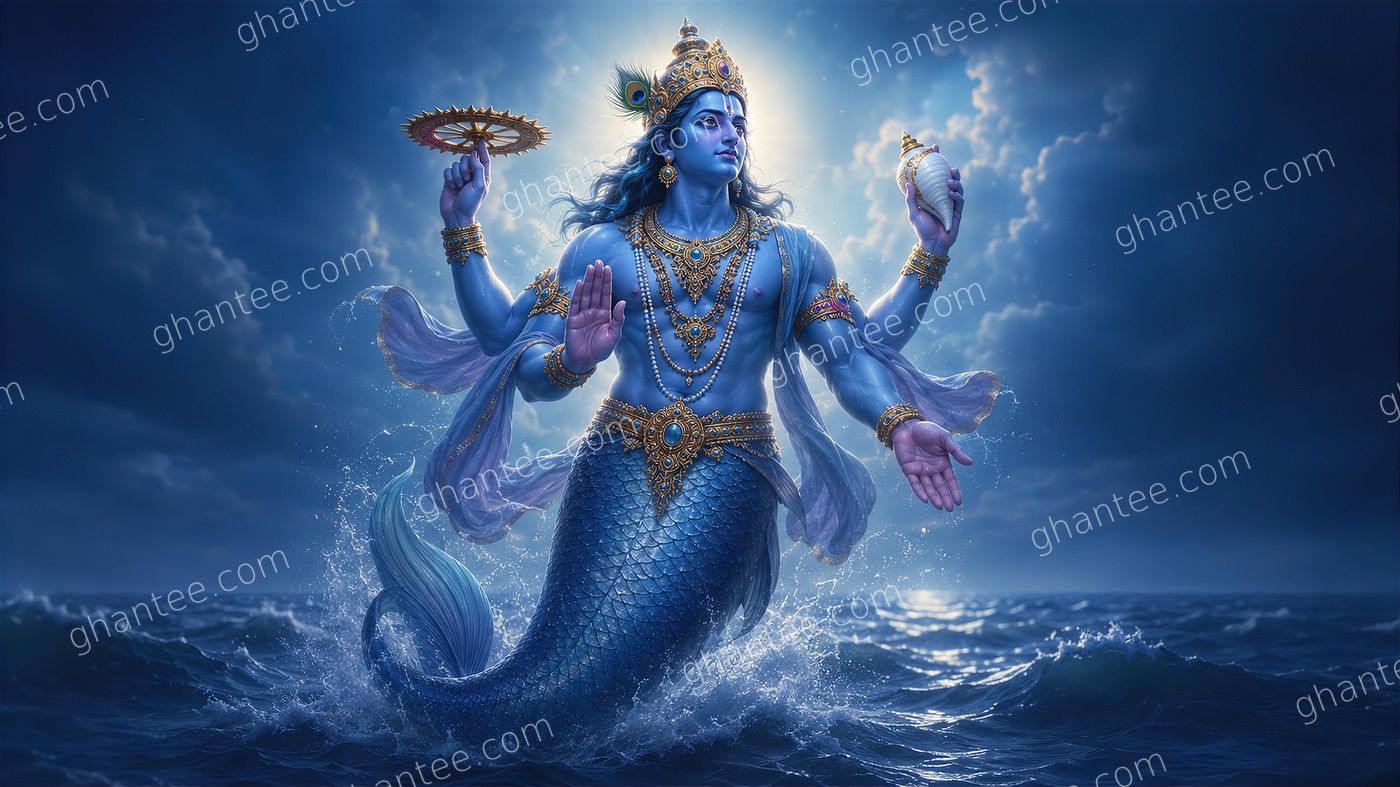
Matsya is the first avatar of Lord Vishnu in the Dashavatara — the divine fish who saved the Vedas and all living beings from a great deluge that dissolved the world at the end of an age. Where the nine avatars that follow intervene in the affairs of an already-existing world, Matsya’s task comes before all of them: preserving the very knowledge and life that everything else would go on to depend on.
According to the Puranas, King Manu found a small fish that grew larger by the day, eventually revealing itself as Vishnu. Matsya warned Manu of the coming flood and instructed him to build a great boat, tying it to his own horn and guiding it safely through the deluge — carrying Manu, the seven sages, seeds of every living being, and the sacred Vedas to safety.
In this post, you’ll find:
Jayadeva’s classical Sanskrit verse on the Matsya avatar (from the Dashavatara Stotra)
Its meaning in English
The story of Manu, the great flood, and the rescue of the Vedas
What this first avatar teaches about preservation before all else
🔱 Matsya Avatar Verse (Jayadeva’s Dashavatara Stotra)
प्रलयपयोधिजले धृतवानसि वेदं
विहितवहित्रचरित्रमखेदम्
केशव धृतमीनशरीर जय जगदीश हरे ॥
🧘♂️ Meaning (Simple & Clear)
प्रलयपयोधिजले धृतवानसि वेदं
In the waters of the great deluge, you held up the Veda.
Pralaya, the dissolution that ends an age, is total — nothing ordinary survives it. Yet the Veda, the foundation of all knowledge and dharma, was carried through untouched.
विहितवहित्रचरित्रमखेदम्
Acting as a boat, effortlessly.
Jayadeva’s word akheda, “without fatigue” or “without difficulty,” is the quiet heart of this verse — what would be an impossible burden for anyone else was carried by Vishnu without strain, because divine protection of dharma is never truly a struggle for the divine itself.
केशव धृतमीनशरीर जय जगदीश हरे
O Keshava, who takes the form of the fish — victory to you, Lord of the universe, Hari!
The refrain shared by every verse of the Dashavatara Stotra.
🔥 Deeper Spiritual Meaning
Matsya’s story is placed first among the ten avatars for a reason: before any battle can be fought or any kingdom protected, the knowledge of dharma itself has to survive. Every other avatar’s mission — Varaha’s rescue of the Earth, Narasimha’s protection of Prahlad, Rama’s defeat of Ravana — presumes that the Vedas, the compass by which dharma is even recognized, are still intact.
The great flood → Total dissolution, a reminder that even the world itself is temporary
Manu, the sole human protected → Righteousness preserved through one sincere, prepared soul, even when everything else is lost
The Vedas carried through the deluge → Knowledge and dharma are the one thing worth saving above all else
The fish growing larger each day → Divine power revealing itself gradually, matched to what the moment requires
Carrying the boat “without fatigue” → True protection of dharma is never actually a burden for the divine
Matsya is often the most overlooked avatar precisely because his battle has no visible enemy — no demon, no tyrant. His opponent is dissolution itself, the natural end of all things. And his victory is the quietest and most foundational of all ten: nothing else in the Dashavatara would have been possible without it.
✨ The Power of Matsya
Matsya teaches that before anything else can be protected, the knowledge of what is worth protecting has to survive first.
The boat represents preparation met by grace — Manu built it, but Vishnu guided it. The flood represents the truth that even the world itself passes through cycles of dissolution. And the effortless carrying of that burden represents the deepest reassurance in the entire Dashavatara: what is truly essential is never actually at risk of being lost.
✨ Final Thought
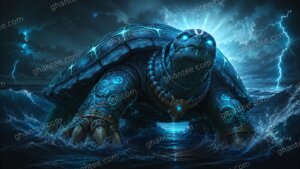
Meditate upon Matsya as the vast, radiant fish, guiding Manu’s boat safely through the waters that dissolved an entire age, the Vedas held secure, dharma’s knowledge carried forward into the world that would come after.
May the remembrance of Matsya protect what is truly essential in your own life through every flood of change, and carry it forward without strain.

Add comment