
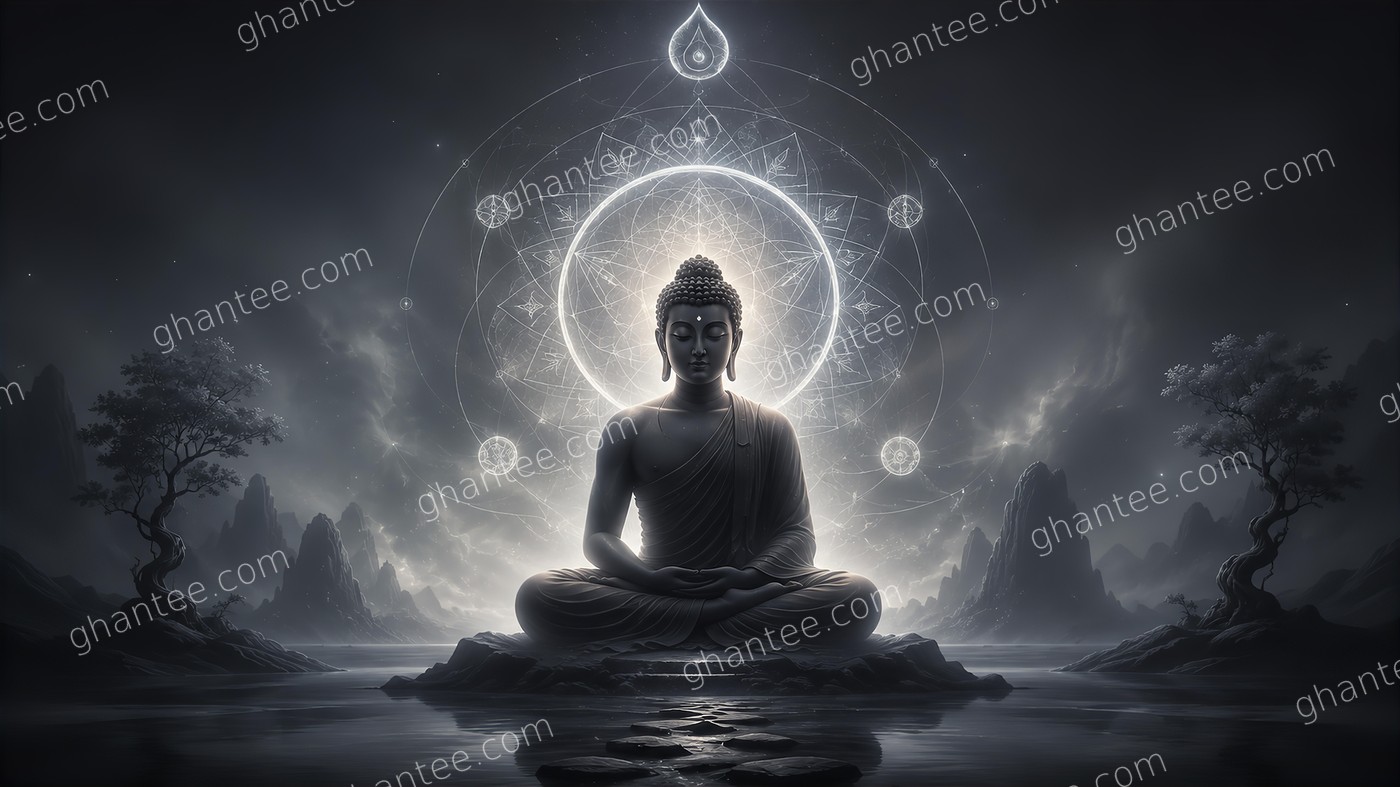
The Buddha is honored in the Dashavatara — the ten avatars of Lord Vishnu — as the incarnation who appeared to turn people away from cruelty performed in religion’s own name, most specifically the ritual animal sacrifices that had come to dominate parts of Vedic practice. Where the earlier avatars fought demons and rescued the Earth from physical peril, this avatar’s battle was quieter and, in its own way, just as radical: a battle against violence carried out under the banner of righteousness itself.
Jayadeva, writing in the twelfth century, placed the Buddha directly within the Dashavatara Stotra — a striking inclusion that reflects how deeply the ideal of compassion (ahimsa) had become woven into the very heart of Vaishnava devotion.
In this post, you’ll find:
Jayadeva’s classical Sanskrit verse on the Buddha avatar (from the Dashavatara Stotra)
Its meaning in English
Why compassion for animal life was placed at the center of an avatar’s purpose
What this avatar teaches about the relationship between ritual and true dharma
🔱 Buddha Avatar Verse (Jayadeva’s Dashavatara Stotra)
निन्दसि यज्ञविधेरहह श्रुतिजातं
सदयहृदय दर्शितपशुघातम्
केशव धृतबुद्धशरीर जय जगदीश हरे ॥
🧘♂️ Meaning (Simple & Clear)
निन्दसि यज्ञविधेरहह श्रुतिजातं
You condemn the entire body of Vedic scripture concerning the rules of sacrifice.
Jayadeva’s word “aha” carries genuine astonishment — this avatar takes the extraordinary step of criticizing ritual injunctions that had come from the Vedas themselves, a boldness matched by no other avatar in the list.
सदयहृदय दर्शितपशुघातम्
O compassionate-hearted one, who exposed the killing of animals for what it was.
The word sadaya-hridaya, “compassionate-hearted,” is placed directly beside the act of condemnation — the criticism does not come from rebellion or disrespect, but from a heart so full of compassion that it could not stay silent while ritual violence was performed in dharma’s name.
केशव धृतबुद्धशरीर जय जगदीश हरे
O Keshava, who takes the form of the Buddha — victory to you, Lord of the universe, Hari!
The same refrain that closes every verse of the Dashavatara Stotra, placing this avatar of quiet compassion on equal footing with Narasimha’s claws and Kalki’s sword.
🔥 Deeper Spiritual Meaning
Every other avatar in the Dashavatara arrives to fight an external enemy — a demon, a tyrant, a flood. The Buddha avatar is different: the thing it confronts is a practice that had convinced itself it was righteous. That is a far harder battle to fight, because it cannot be won with a sword or a claw. It can only be won by waking people up.
Condemning ritual sacrifice → Dharma is never served by cruelty, however sanctioned by tradition it may appear
A compassionate heart as the source of the critique → True reform comes from love for those who suffer, not contempt for those who err
Placed among avatars who fought with weapons → Compassion is treated as an equally decisive divine force, not a lesser or softer one
Inclusion within the Dashavatara itself → No genuine spiritual teaching, wherever it arises, stands outside the Vedic tradition’s own capacity for course-correction
The astonishment in Jayadeva’s own words → Even the poet recognized how radical this act of divine compassion truly was
This avatar is a reminder that dharma is a living, breathing principle — never simply “whatever a ritual instructs,” but always measured against compassion for every being it touches. When the two come into conflict, the Buddha avatar shows which one Vishnu himself sides with.
✨ The Power of the Buddha Avatar
This avatar teaches that the most powerful battles are not always fought with weapons — sometimes the deepest transformation comes from a single, compassionate heart willing to say what needed to be said, even against long-standing tradition.
The condemnation of sacrifice represents dharma correcting itself from within. The compassionate heart represents the true source of all reform. And the avatar’s place among nine others who fought with far more visible force represents a simple truth: gentleness, applied with conviction, is its own kind of unstoppable power.
✨ Final Thought
Meditate upon this avatar of Vishnu as the compassionate-hearted teacher, who looked upon ritual violence performed in religion’s own name and could not stay silent — who chose the quieter, harder path of waking a heart rather than defeating an enemy.
See in this form the same divine purpose that lifted the Earth and tore through a tyrant’s boon — here turned inward, toward the gentlest and most enduring kind of victory.
May the remembrance of this compassionate avatar awaken the courage to question cruelty wherever tradition has made it invisible, and the gentleness to correct it with love.








Add comment