
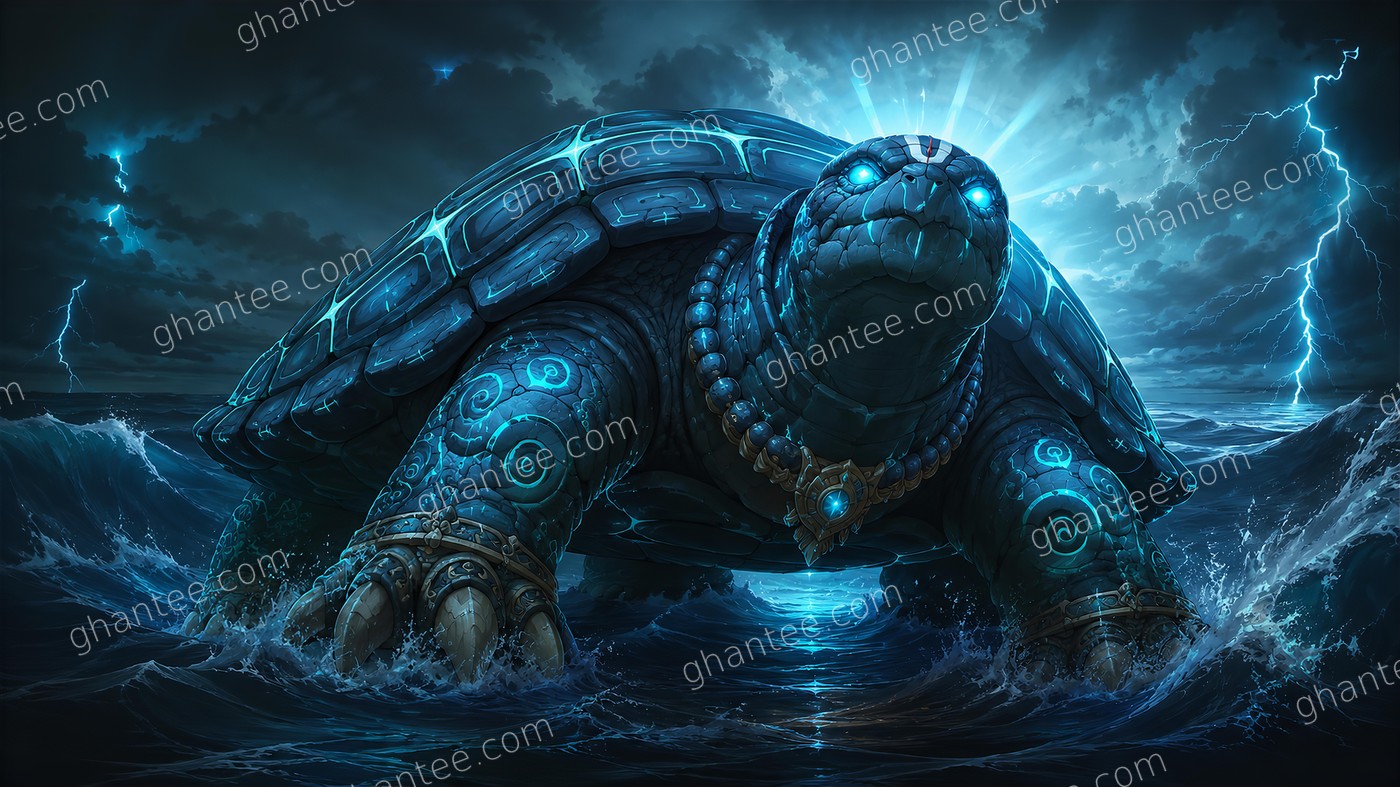
Kurma is the second avatar of Lord Vishnu in the Dashavatara — the divine tortoise who supported Mount Mandara on his back during the Samudra Manthan, the churning of the cosmic ocean. When the devas and asuras needed a stable base to churn the ocean of milk in search of amrita, the nectar of immortality, no ordinary support could bear the weight — so Vishnu himself became the foundation.
Without Kurma’s steady back beneath the churning mountain, the entire Samudra Manthan — the myth that gave rise to Lakshmi, Dhanvantari, the celestial elixir, and so much else that defines Hindu cosmology — could never have taken place at all.
In this post, you’ll find:
Jayadeva’s classical Sanskrit verse on the Kurma avatar (from the Dashavatara Stotra)
Its meaning in English
The story of the Samudra Manthan and why a foundation was needed
What Kurma’s stillness teaches about being the support for something greater
🔱 Kurma Avatar Verse (Jayadeva’s Dashavatara Stotra)
क्षितिरतिविपुलतरे तव तिष्ठति पृष्ठे
धरणिधरणकिणचक्रगरिष्ठे
केशव धृतकच्छपरूप जय जगदीश हरे ॥
🧘♂️ Meaning (Simple & Clear)
क्षितिरतिविपुलतरे तव तिष्ठति पृष्ठे
The vast Earth rests upon your immense back.
Jayadeva’s imagery here is deliberately understated — an entire mountain, and by extension the weight of the churning itself, resting calmly on a form that does not move, does not strain, does not shift.
धरणिधरणकिणचक्रगरिष्ठे
Made weighty by the callus formed from bearing the weight of the world.
The image of a callus — kina — is striking: even a divine form, when it takes on a physical task, bears the visible mark of what it carries. It is a subtle reminder that even avatars take their labor seriously, rather than performing it without cost.
केशव धृतकच्छपरूप जय जगदीश हरे
O Keshava, who takes the form of the tortoise — victory to you, Lord of the universe, Hari!
The refrain shared across every verse of the Dashavatara Stotra.
🔥 Deeper Spiritual Meaning
The Samudra Manthan is one of the richest myths in the entire tradition — devas and asuras, ordinarily enemies, working together to churn the ocean of milk with Mount Mandara as the churning rod and the serpent Vasuki as the rope. But every churning motion needs an unmoving base beneath it, or the whole effort collapses. That base was Kurma.
Mount Mandara as the churning rod → Even the greatest efforts need the right tool, not just the right intention
Kurma as the base → Some of the most essential roles in any great undertaking are the ones nobody sees
The callus from bearing the weight → Support offered sincerely always leaves its mark, and that mark is a sign of real effort, not weakness
Devas and asuras churning together → Even opposing forces can be united by a shared purpose, when the goal is worth it
What emerged from the churning — Lakshmi, Dhanvantari, amrita → Nothing of lasting value comes without patient, unglamorous support underneath it
Kurma’s stillness is its own kind of strength — the churning above created immense turbulence, dramatic and visible, while the foundation below simply held, without complaint, without seeking credit. That patient, unmoving steadiness is exactly what made everything above it possible.
✨ The Power of Kurma
Kurma teaches that being the foundation for something greater is its own form of greatness, even when it goes unnoticed.
The mountain represents the great, visible ambitions that every era pursues. The tortoise beneath it represents the quiet, essential support without which none of those ambitions could ever be realized. And the callus formed by that support represents the honest cost of steadiness — never glamorous, always necessary.
✨ Final Thought
Meditate upon Kurma as the vast, unmoving tortoise, Mount Mandara turning steadily upon his back as the ocean of milk churned above him, patiently bearing the weight that made the emergence of Lakshmi and amrita possible.
May the remembrance of Kurma grant the steadiness to support what matters, even when the effort goes unseen, until what is truly valuable rises to the surface.

Add comment