
As an Amazon Associate, House of Ghantee earns from qualifying purchases.
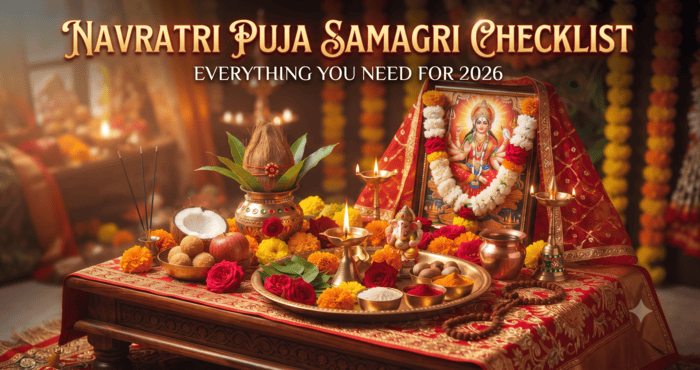
Before Navratri begins, the most common source of last-minute stress is realizing what’s missing from your puja setup. Here’s a complete, practical checklist you can arrange from one place — whether you’re observing the full nine days or focusing on just the first and last.
Basic Puja Thali Essentials
Brass Puja Thali Set
A complete brass thali set — including the thali itself, a diya, an agarbatti stand, and a small katori — covers the essential base for Navratri. If you already have a thali but are missing the diya or katori, these are readily available separately too.
Cotton Wicks and Pure Ghee
Whether you’re keeping an akhand jyot burning for all nine days or simply doing the daily aarti, running out of cotton wicks or ghee/sesame oil partway through is one of the most common disruptions. Stocking up on a larger pack in advance means you won’t have to interrupt the observance to restock.
For the Akhand Jyot
Akhand Diya (Brass or Steel)
If you’re keeping the nine-day akhand jyot as a vow, a dedicated larger diya — one that holds enough oil or ghee that it doesn’t need frequent refilling — is the most practical choice. Steel akhand diyas are generally considered safer for sustained, extended burning.
For Devi Sthapana
Kalash (Copper or Brass)
Kalash sthapana takes place on the first day, Ghatasthapana — copper kalash is traditionally most preferred, though brass is also widely accepted. A good-quality kalash gets reused year after year, so it’s worth thinking of as a one-time investment rather than an annual purchase.
Chunri and Shringar Set
Offering a chunri and shringar items (bindi, sindoor, bangles) to Devi Maa is one of the most heartfelt parts of Navratri puja. A ready-made shringar set saves time when you’re arranging several items together at once.
For Havan and Aarti
Havan Samagri Combo Pack
Performing a havan on Ashtami or Navami is a common practice. A ready-made havan samagri combo pack (including the havan kund, samagri, and camphor) is far more convenient than sourcing everything separately, especially if this is your first time conducting a havan at home.
Buy Once, Use Every Year
Items like the thali, diya, and kalash last for years once you invest in good quality — only the consumables (wicks, ghee, havan samagri) need replacing annually. If you’d like to read more about the individual forms of Devi worshipped during Navratri — their dhyana, mantras, and significance — take a look at our Dhyanam guides.
Every purchase made through the links above supports House of Ghantee at no extra cost to you — thank you for helping us continue creating devotional content.







Add comment