
As an Amazon Associate, House of Ghantee earns from qualifying purchases.
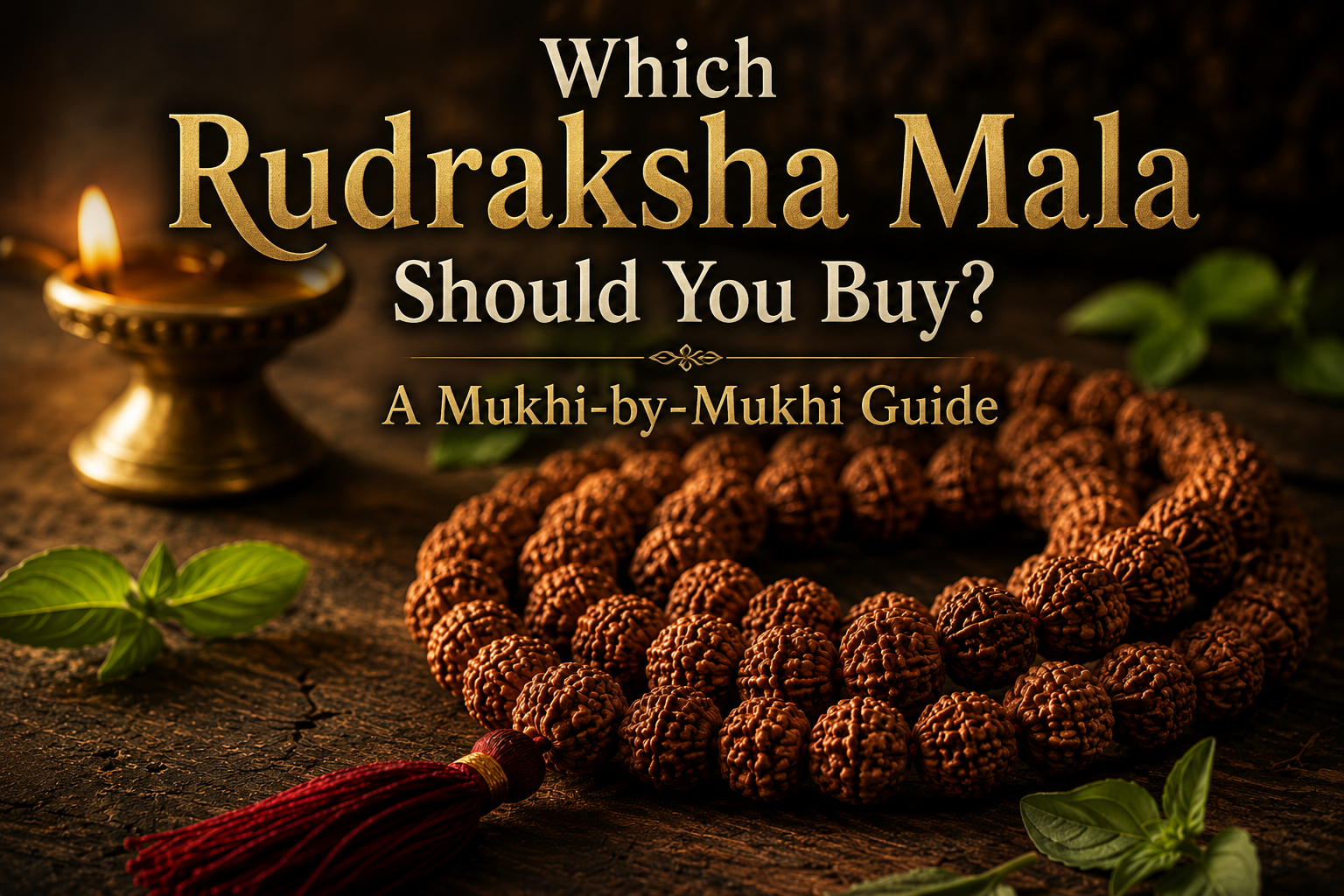
Before buying a Rudraksha mala, the first question that usually comes up is — which mukhi should you choose, and how do you know if it’s genuine? This guide answers both questions, organized by mukhi, so you can pick the right mala for your specific practice.
One thing worth stating upfront — beliefs around Rudraksha’s authenticity and its astrological or health-related effects vary across traditions and individuals. This guide is based on traditional understanding and common devotional practice, not presented as scientific claim.
5 Mukhi Rudraksha — The Most Common Starting Point
The 5 Mukhi Rudraksha is traditionally regarded as the form of Kaalagni Rudra, and it’s the most widely worn Rudraksha of all — especially among those wearing one for the first time. It’s also the most widely available, which makes it an accessible starting point.
1 Mukhi Rudraksha — The Rarest Form
The 1 Mukhi Rudraksha is considered the direct form of Shiva himself, and it falls into the rarest and most premium category. Its price varies considerably due to the difficulty of distinguishing genuine from fake — when buying in this category, pay extra attention to certification and the seller’s trusted history.
Panchmukhi Rudraksha Mala — As a Complete Mala
If you’re looking for a complete mala for japa or mantra chanting (rather than a single bead worn as a pendant), a 108-bead Panchmukhi mala is the traditional choice — used for the Rudra Gayatri or any Shiva mantra japa.
How to Tell If a Rudraksha Is Genuine
When buying online, keep these points in mind:
- Always check the seller’s certification and return policy
- Verify the natural mukhi lines (facial grooves) — artificially carving grooves is a common technique to avoid falling for
- A price that’s far too low can be a red flag, especially in rarer mukhi categories
- Read verified buyer reviews rather than relying on rating count alone
Before You Wear a Rudraksha
Traditional practice is to cleanse the Rudraksha with Ganga jal or plain purified water, taking a sankalp with a Shiva mantra before wearing it. If you’d like to read more about Shiva’s iconography and his associated mantras, take a look at our mantra meaning guides.
Every purchase made through the links above supports House of Ghantee at no extra cost to you — thank you for helping us keep creating devotional content.




Add comment